

We Slidin'
Looking at four possible futures in Carney's "post-lie" era

Yesterday’s excellent Today in Tabs newsletter landed just as Trump landed in Davos, and a few hours before Carney spoke, and it so beautifully summed up the vibezzz right now that I laughed out loud and made my eye hurt. (I’m writing this one from bed, since problems from a recent minor eye injury have left me temporarily out of action.)
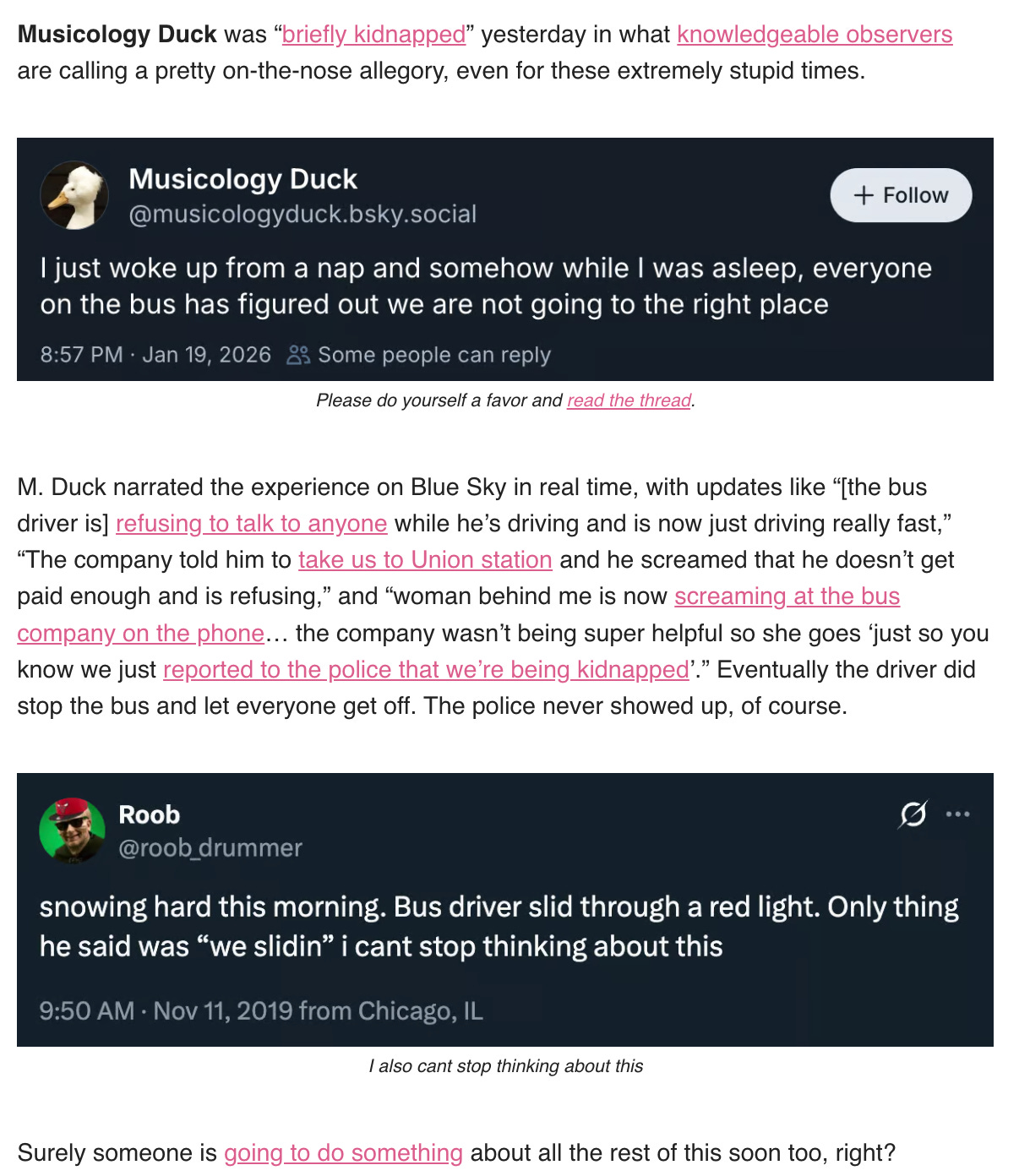
I think we can all relate to “we’re slidin”. That feeling of chaos, a lack of control and general disbelief that all this is actually happening. In this article I try to understand why we’re sliding and what we might be sliding towards.
The One-Eyed Man
Having one eye out of action for most of a week means not being able to watch anything. So I’ve been a sort of dark recluse, spending hours lying in bed listening to audiobooks and podcasts - Klein’s Doppleganger, Harari’s Nexus, Alderman’s Don’t Burn Anyone at The Stake Today, Thiel’s views on democracy, Rutger Bregman on Moral Ambition, Trump on Greenland, Kindness by Kevin Kelly, Tariq Ali on the Left since 1945, livestreams from Davos, the occasional sci-fi short story - then slipping into sleep whilst they warble in the background.
And what with me being an American Studies student, a systems and service nerd, plus an AI startup COO - well it’s a heady time. Subdued in this dark room, momentous everywhere else!
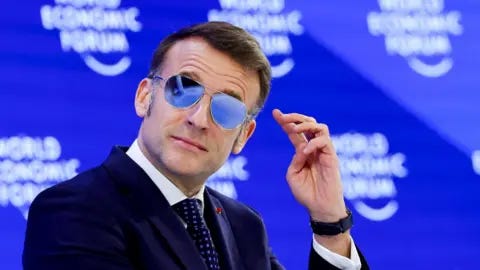
Power, money, technology, legitimacy - the relationships between all these things is being renegotiated in front of us. Old stories are losing credibility, whilst new ones are being tested. Some are seductive. Some are frightening.
So I emerge (literally) blinking into the light asking, what does the future look like?
I’ve felt better enough to spend some time writing - so thought I’d explore four futures, seen through the lens of who they serve and how.
I’m not offering predictions, just possible directions of travel. Overlapping, bleeding into one another.
Driving us where?
First let’s start by looking at who’s currently driving this bus, and what belief systems they seem to have in common. Until some of these middle-powers wrestle the steering wheel away, these are the main beliefs I keep spotting:
a belief in the power of strong-man change
commitment to business-first governance
an overriding impatience with democratic and legal restraints
Underlying these appear to be some core assumptions:
the world is dangerous and zero-sum game theory prevails
history is driven by force and order must be imposed
hesitancy is weakness and invites collapse
legitimacy flows from control rather than consent
Also look at the backgrounds of these people. To a man, all have grown out of business, generating unimaginable wealth in the process. Politics matters only insofar as it interferes with or enables nebulous outcomes - usually related to spreadsheets - cash flow, bottlenecks, risk, optionality, control.
Ideology feels thin here. Belief systems - democracy, freedom, nationalism and even religion - have become more like tools, easily manipulated by algorithms on vast scales. The ideology is of the modern CEO - move fast and break things - whether software, business models or international protocols. Given none of them are in need of extra cash, could the end be viewed as movement in and of itself?
Growth over limits
Speed over deliberation
Building over arguing
This is why I think Peter Thiel felt able to suggest that figures like Greta Thunberg represent something like the antichrist. It sounds absurd until you sketch the underlying logic. In this worldview:
progress is salvation
stagnation is apocalypse
degrowth is death
restraint is decay
Anyone saying stop is an existential threat to the goal. Altruism and empathy look like weakness. Care looks like indulgence.
Around the world, old style conservative political movements are dead or dying. Everyone now wants progress, to the extent that the progressive left are spinning, defending the status quo. The big new questions now about progress are - how fast and for whom?
Accelerationism is seductive because it promises to cut through dysfunction, but as in a roller coaster, it makes people queasy. Strong-man systems build quickly, but tend to flatten people in the process.
More often than not, these two approaches provoke a backlash, because people refuse to live indefinitely as variables / footnotes / rounding errors in someone else’s model of progress.
Why now? The performance ends
What’s changed recently is that a big long-term global performance has ended. New choices are being forced upon us.
Mark Carney has been rightly celebrated for capturing this message at Davos, retelling Václav Havel’s story of the shopkeeper who places a sign in his window not because he believes it, but to avoid trouble. The system persists because everyone willingly participates in a lie. A useful lie.
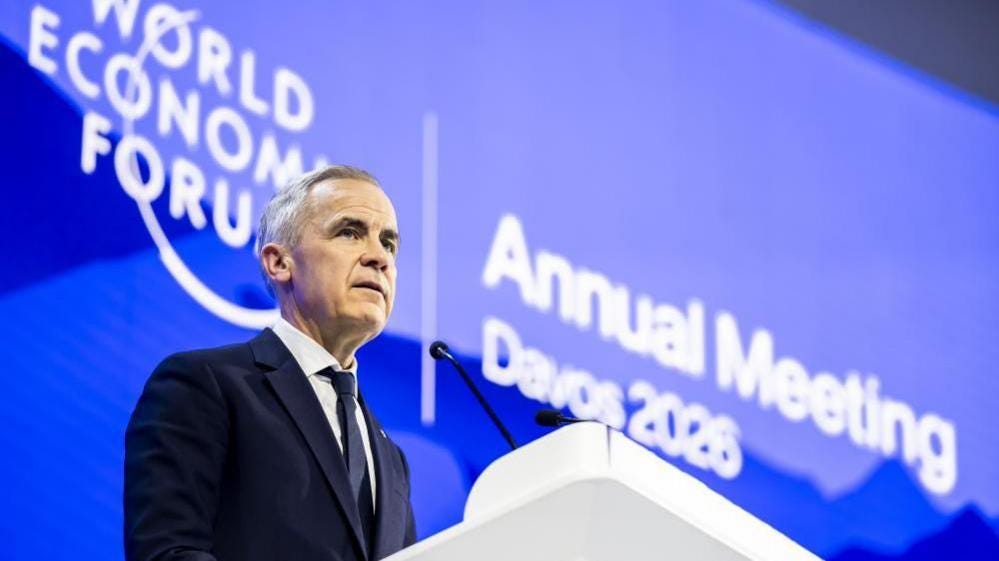
Since 1945, much of the world lived inside a convenient lie: the rules-based international order. We knew it was partial and inadequate. We knew the strongest often bent the rules. But the fiction was useful because it provided stability, predictability and enough order for values to matter.
But Carney called it: that bargain no longer holds. We must choose to live in truth or stay living in a lie.
The cards are now on the table. The game has changed. So now everyone has to work out what their cards are worth.
What do we replace the lie with? What is our new truth? Or do we just keep on “slidin” towards our fate?
Future One: Democratic Managed Decline
In this future, democracy continues. It’s formally intact, procedurally correct, but emotionally exhausted.
Elections are held. Reports are written. Inquiries are launched. Public institutions survive, but in a state of permanent strain. Nothing collapses outright. But at the same time, nothing is fully renewed.
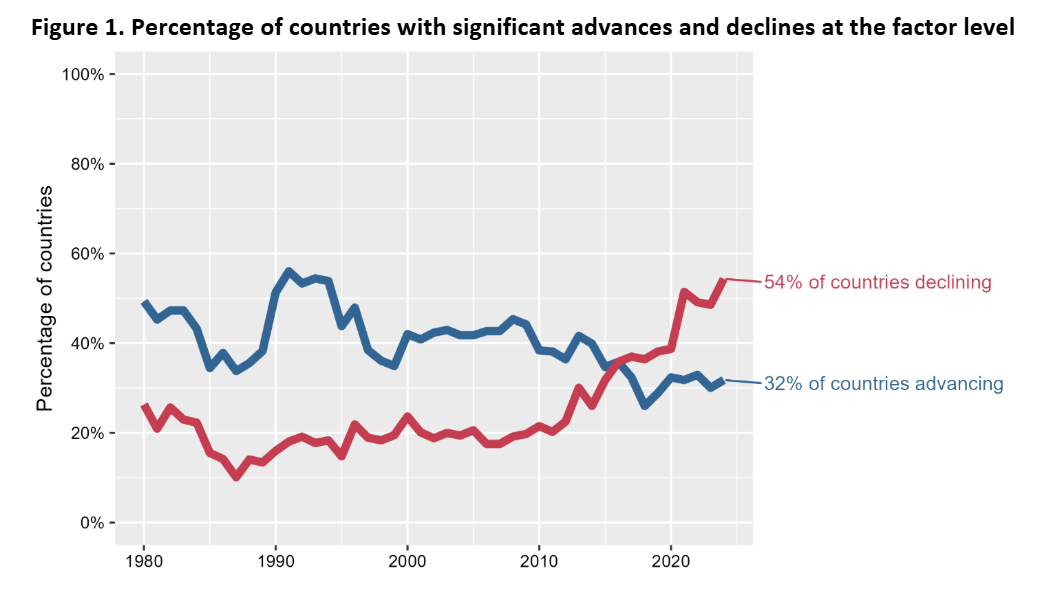
Public systems still exist, but they feel thinner. Not just underfunded, but under-believed-in. Services are rationed quietly by capacity. People working inside them rely on professionalism, goodwill and improvisation to bridge the widening gap between promise and reality. I just spent 48 hours navigating four parts of the NHS to get my eye sorted, and it really did all feel very tired and stretched.
What defines this future is a feeling of fatigue. People are trying to keep the system upright. The dominant emotional register is apology rather than authority: we know this isn’t ideal, we’re doing our best, please bear with us.
This future still contains kindness, but it’s compensatory. People help one another because the system can’t. (And pity the underpaid foreign born nurses going the extra mile, even when the press tells them they’re not really welcome here.) Care in this future barely survives through individual effort and up against institutional design. Generosity becomes load-bearing, which is very fragile. Carrying it on is a feat of endurance.
This is the future accelerationists really hate, not because it’s unjust, but because it’s slow and compromising. It preserves participation like a sacred cow, at the cost of decisiveness and progress. We’re in the era of the CEO-as-leader, and fundamentally, CEOs value speed over consent. To a CEO, patient, consensus-based waiting can appear as irresponsible.
Future Two: The Vendor State
In the second future, the state doesn’t disappear, it just hollows out.
Formal authority remains with governments, but real capacity migrates elsewhere: to platforms, vendors, algorithms, consultancies and outsourced systems that promise efficiency where politics has stalled.
Decision-making shifts further into software. Risk models replace deliberation and dashboards replace debate. This is the control room Dominic Cummings dreamt of during Covid. In this future power is exercised through data and procurement, rather than deliberation and law. And given that much of this software is US-based, this future means a country keeps its leaders, but is increasingly run offshore.
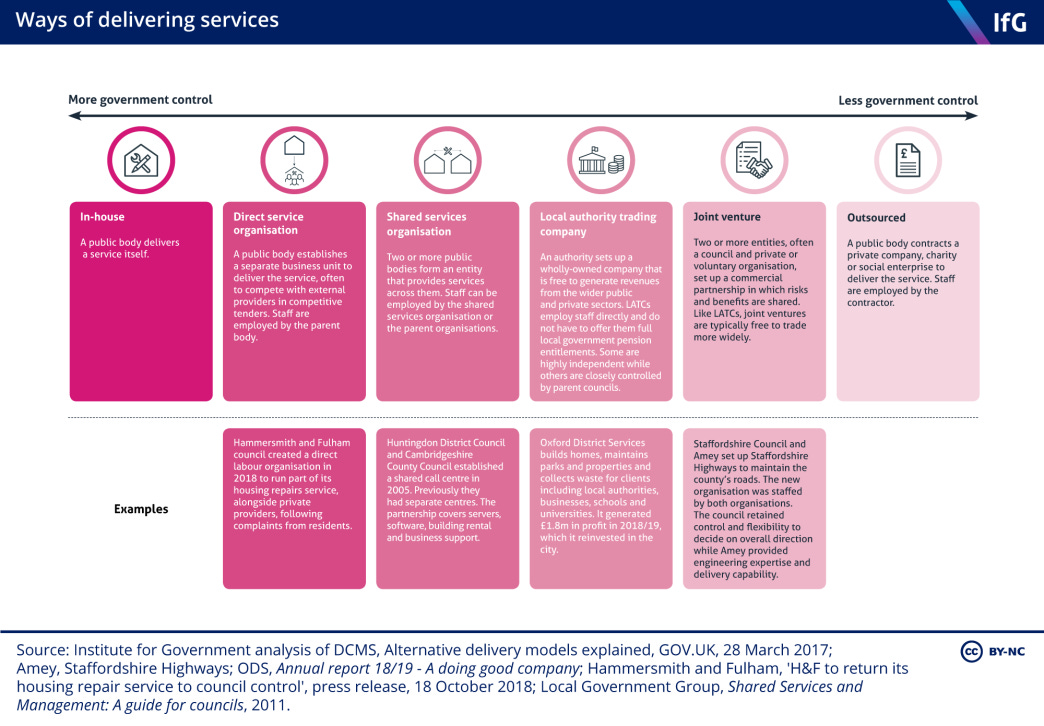
The more we head down this road, the more democracy becomes an act of performance. Elections choose leaders, but leaders inherit systems they didn’t design and cannot easily interrogate. Arguably we’re already here. I’m reminded of Yanis Varoufakis saying that, when he got rushed into power in Greece, he realised there was no-one at the wheel - no real power to make real change. That the power was elsewhere.
This is a future some executives openly admire when they look at China, not because of its ideology, but because of its capacity. Decisions happen quickly. Infrastructure appears on command. Dissent is managed. The “smartest people” decide and get on with things.
According to Tariq Ali, the old joke goes: “In China you can’t change your party, but you can change your policy. In the West you can change your party, but you can’t change your policy.”
This future feels slick and competent. Things work. Processes are joined up. Decisions are fast and consistent. It’s very enticing to someone like me who has worked for years in software and designing services, but you don’t get much of a say, unless you’re one of those “smart people”.
Also, this sort of slick service often classifies intangible value as secondary - care, compassion, kindness, patience - all tend to be lost in spreadsheets. Slick services rely on removing variance in demand and making supply as efficient as possible. But humans are infinitely variable in need and infinitely complex to care for. The unpredictable generosity of one human toward another (the kind Kevin Kelly describes, where strangers help not because they must but because they can) becomes an anomaly. The fact that serving others is rewarding for the humans involved is not accounted for. That’s just noise in the system.
In this slick future you won’t feel oppressed - you’ll feel managed. When you don’t fit, there’s no overt cruelty. Just distance. A threshold you never agreed to and cannot appeal. Computer says no etc.
This future insists it’s neutral, technical and inevitable. But it quietly replaces the socially democratic citizen contract with “human-centred usability”. Accountability becomes opaque.
It’s very easy to mistake this for maturity, until something goes wrong and you realise there is no human centre left to argue with. Anyone who’s tried to work their way through something like the SEND system can attest to this Kafkaesque feeling.
Future Three: Patchwork Worlds
In the third future, the idea of a shared future fractures and fragments. Again, this future is already here, just unevenly distributed - eg online tribes, living in separate epistemic bubbles, breaking the coherency of geographic nation states.
Capital, talent and infrastructure stop waiting for states to get their shit together and instead build around themselves: special jurisdictions, cities on liners in open ocean, freeports, charter cities, Singapore-on-Thames, regulatory enclaves etc.
No single authoritarian state. Just multiple, competing zones that are each exceptional.
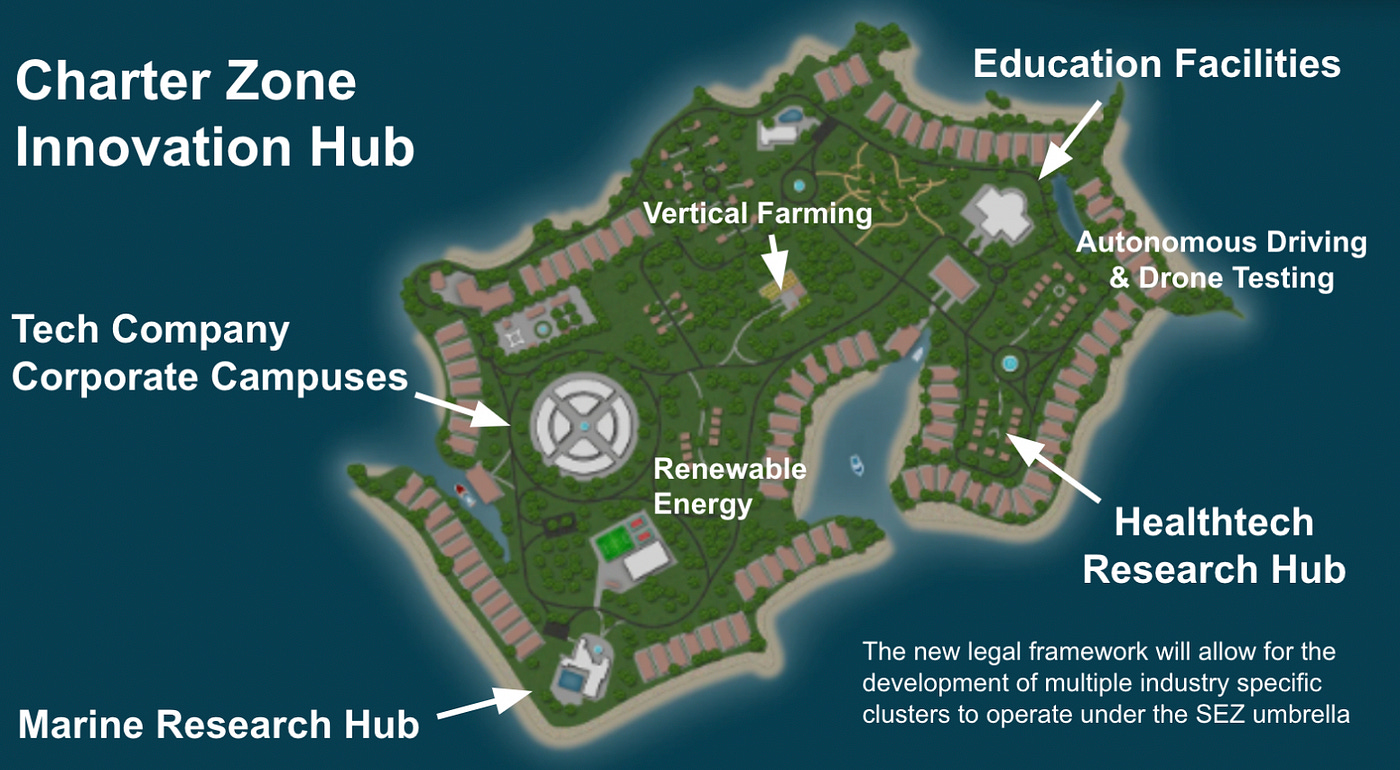
Membership of the system is likely performance based and service overtly stratified: premium levels for those who generate value and baseline levels for those who don’t.
Think of micro versions of China’s social credit scoring system. The language remains polite, but the exclusion is structural. In this future people opt out because democracy can’t be made to work at scale. Instead they bypass it quietly.
Also think Singapore. Enormous growth and world-leading competitiveness, but also dominated by a single party. It’s been described by as a form of “pragmatic authoritarianism.”
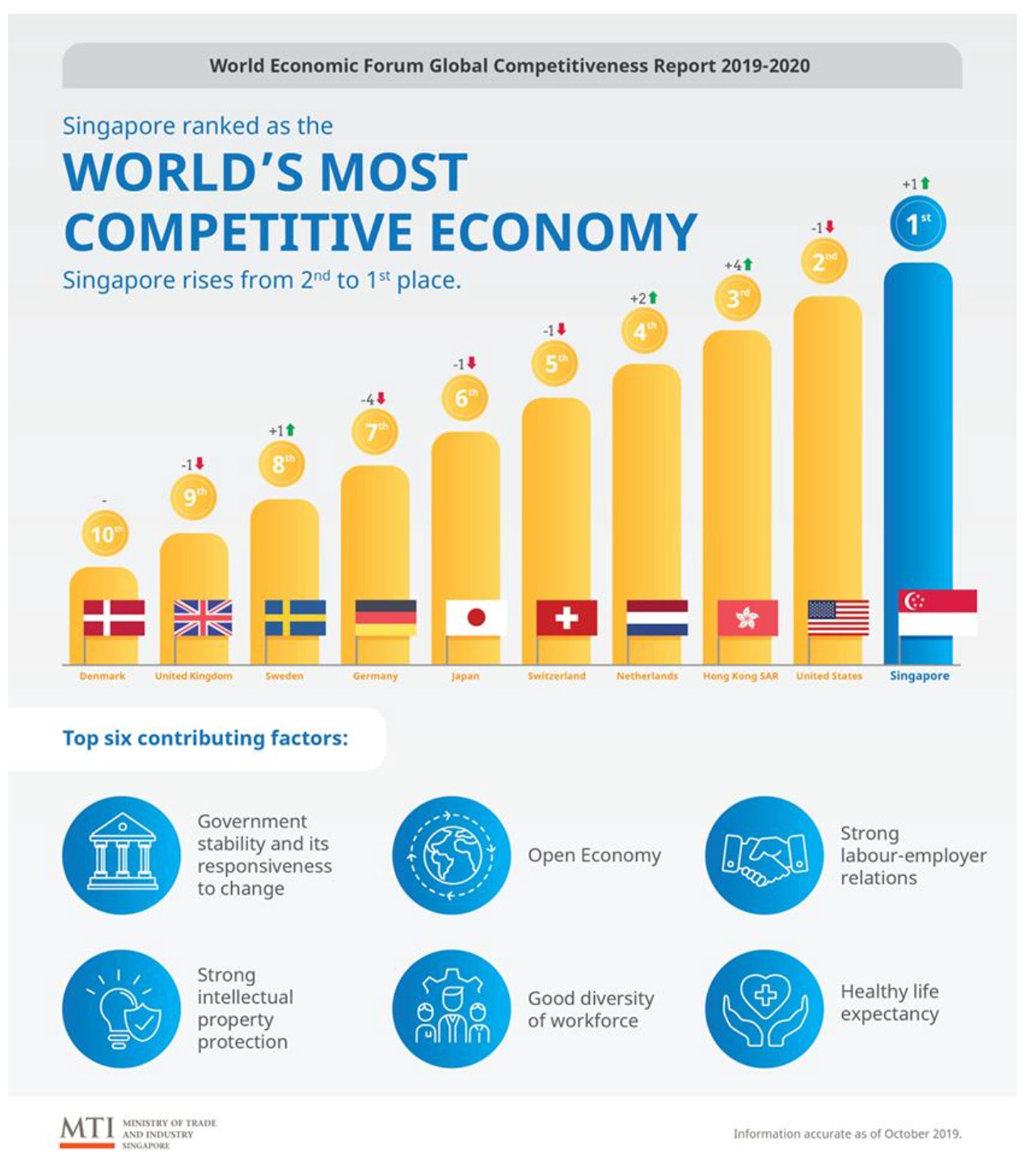
This future exists for everyone, but it’s spread out unequally.
Future Four: Democratic Renewal Under Pressure
The fourth future is the one I want for us, but the hardest to see right now and the hardest to create (…of course it is…)
Here societies choose to rebuild state capacity deliberately: investing in people, infrastructure and institutions that can act competently without bypassing consent.
Technology is treated as public infrastructure. AI supports human judgment rather than replaces it. Systems are designed to hold and manage complexity, rather than erase it.
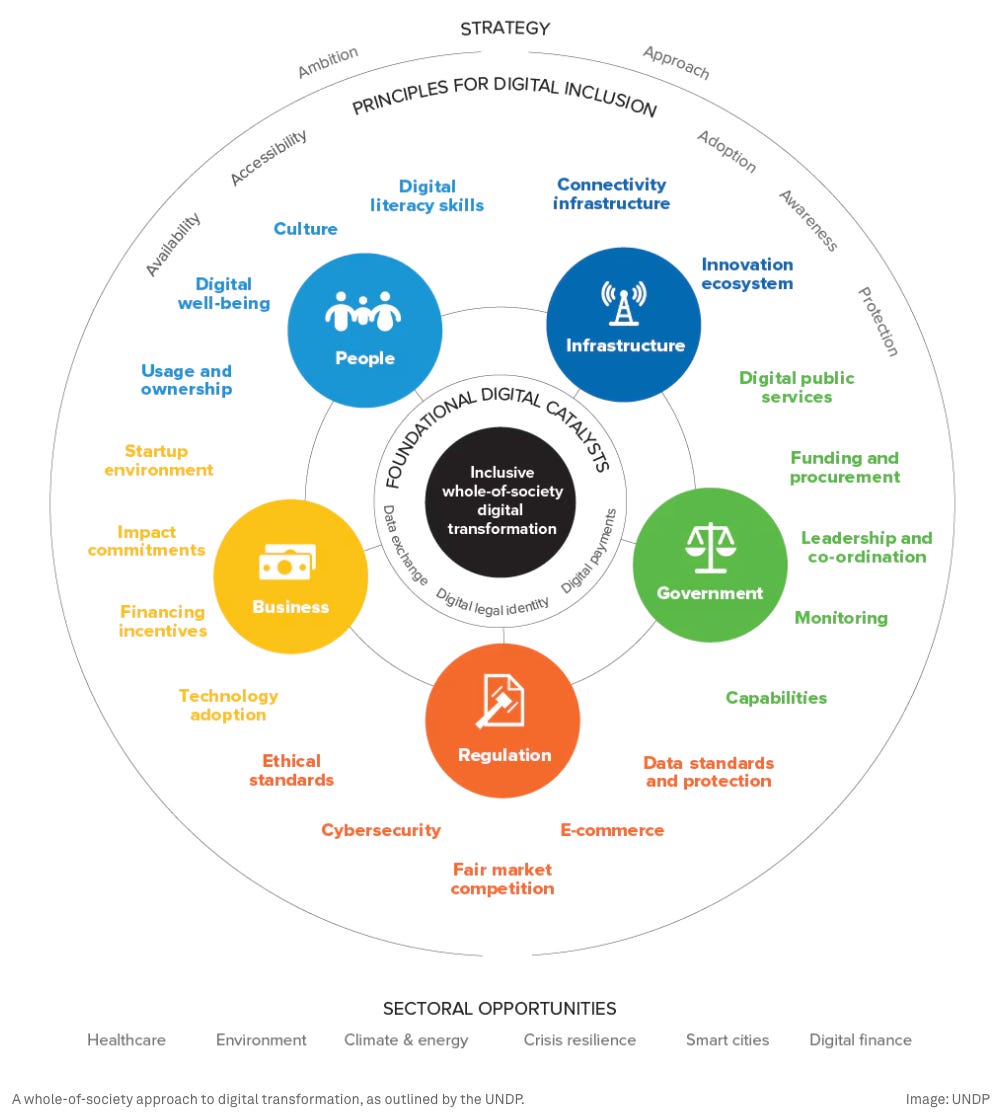
This future is slower than accelerationists want, but at least is faster than stagnation. It has become more selective about what decisions require mass participation and ruthless about making the rest just work. It’s another middle way, but not boring this time! It’s less about balancing left and right, and more about balancing speed vs deliberation, authority vs consent, tech value vs human values.
Service here makes room for the unpredictable, unmeasurable aspects of human life: generosity, reciprocity and kindness. These aren’t seen as sentimental extras that mess up the spreadsheet, but as civic assets that add up to more than the sum of their parts.
This future doesn’t have any natural patrons, because it’s messy and complicated. It requires money, patience and political courage, all of which are currently scarce. So it’s a fragile idea, but it’s an exciting one. A future that tries to realise Bentham’s vision through tech - public luxury and private sufficiency. The technology exists to resolve so many problem, it just isn’t run in service of right things.
And it requires moral ambition - a useful phrase coined by Rutger Bregman - and drawn from the fact that of the 10 people who began the movement to end slavery, 8 were entrepreneurs. He’s calling on people to use their money for more moral purposes - to help the largest amount of people to progress in life.
Final thoughts
So - from a one-eyed man literally scrabbling around for clues in the dark - picture four futures running in parallel.
People apologise constantly while holding fraying systems together.
Everything works, but no one asks your consent.
The future is gated and uneven.
Progress is slower, harder, but worth defending.
The future is coming at us very fast at the moment, with each day seemingly more turbulent than the last. At the moment we’re being carried along, so I ask - do we want to be carried along by the one that moves fastest, or do we want to be carried by the one we choose?
Better get choosing, as time is not on our side.